
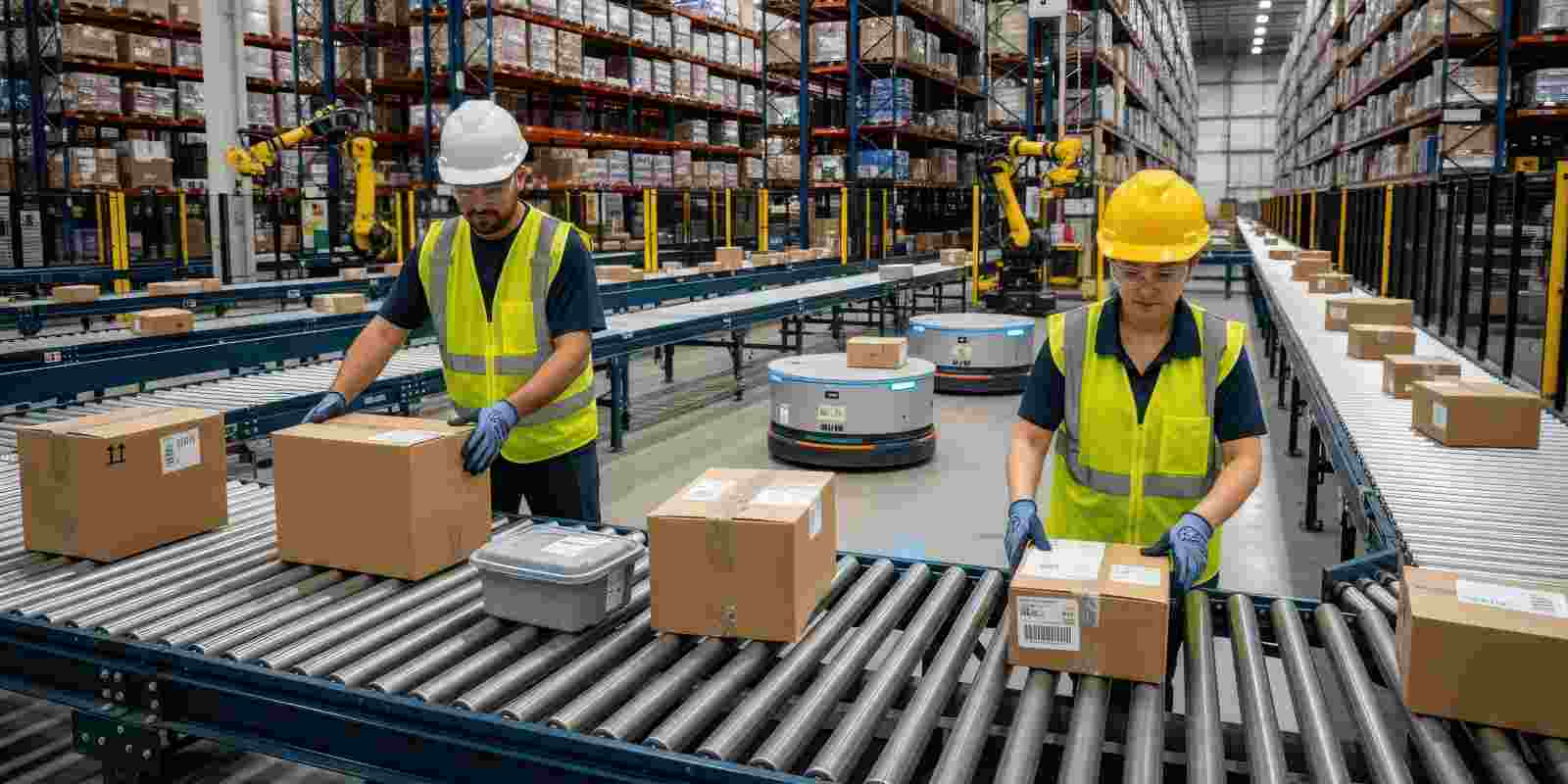

Warehouse operators, especially those with large distribution centers in smaller markets, know that labor shortages are impacting their industry. According to the U.S. Bureau of Labor Statistics, the average total separations rate in warehousing was higher than the national average in every year from 2020-2024 by as high as 0.8. What this basically means is that warehouses are losing workers faster than other industries, and it has contributed to a shortfall of skilled workers in warehouse picking, shipping, vehicle operations, and other jobs.
Distributors and other chains are reacting to growing labor pressures, including unpredictable turnover and shallow talent pools. This means finding recruitment and production strategies that actually work in smaller markets. When hiring more people isn’t always an option, organizations need ways to find the right people at the right time.
Covered In This Blog
Learn how distributors, chains, and other warehouse-dependent organizations keep productions moving despite talent shortages and turnover challenges. We’ll discuss an overview of small distribution markets, the challenges they face, and potential solutions to the labor crisis in 2025 and beyond.
Why Are Smaller Markets Feeling Labor Pressure?
Small labor markets feel shortfalls of skilled workers and high separation rates more profoundly than larger ones due to a few factors:
- Limited Population: Fewer qualified local workers means a more limited talent pool for many conventional hiring processes.
- Competition: Large e-commerce enterprises often claim the most skilled and available labor. In a shortage, this leaves a shallower pool for small and mid-sized operations. However, even other large operations end up competing for talent, further straining the market.
- Certification Gaps: With a shallower talent pool, distributors often deal with the challenges of untrained or uncertified laborers. In high-risk safety positions such as powered industrial truck (PIT) operation, this can cause production delays, liability issues, and even dangerous accidents.
- Demand Spikes: Organizations with complicated warehousing processes often deal with seasonal demand changes during holidays or promotions, which also change their labor requirements. In smaller markets, this increases the demand for skilled labor even further, as other operations try to reserve skilled talent to meet demand.
What Are The Costs Of Labor Shortages?
When dealing with a shallow talent pool and a shortage of qualified labor, warehouse operations can miss deadlines, ship inaccurate orders, and burn out their existing staff. This can lead to several challenges, including:
| Challenge | Impact |
| Customer Satisfaction Issues | As workers become fatigued and fewer laborers are available to complete orders, especially during seasonal demand increases, customer satisfaction can be negatively impacted. |
| Operational Downtime | Being understaffed, distribution centers may need to cut their hours of operation or risk losing uptime in the middle of a busy fulfillment schedule. According to recent studies, operational downtime is one of the primary profit-killers in warehouse operations, costing on average around $10,000 per hour, using a 750,000 sq. ft. warehouse operating 5,500 hours per year as a baseline. |
| Increased Shipping Costs | As orders need to be rushed to recover from mistakes or missed shipping deadlines, the warehouse will shoulder the burden of increased shipping costs. |
| Reputational Damage | In addition to customer satisfaction challenges, a warehouse’s relationship with its suppliers can be damaged by labor shortages due to less reliable order fulfillment. |

Impact Summary: To meet seasonal and even off-season demand, warehouse operations require a steady supply of skilled workers. If the available talent pool is limited, operators need to find a way to expand their talent pool.
Rapid-Response Warehouse Workforces Close The Gap In Smaller Markets
Warehouse workers, who operate heavy machinery, direct fulfillment schedules, check shipments, update inventory, and more, cannot be replaced by unskilled or untrained teams. Therefore, the only way to address these challenges is to rely on an alternative source of talent. This is where rapid-response warehouse workforce solutions step in.
These solutions provide warehouse and distribution chains with reliable, pre-certified, and trained workers customized to their industry, certification needs, and seasonal demand. Teams of 5-50 workers can be deployed to a warehouse to fill out the talent pool without the additional costs of hiring seasonal workers and the risks of hiring uncertified local workers.
These rapid-response workforces keep productivity moving, even during seasonal spikes, with these benefits:
- Reliable Deployment: Rapid-response workforces reassure warehouse operators that their operations will be covered. Compare this to relying on seasonal hires, which require more administrative oversight.
- Rapid-Response Labor: Some workforce solutions offer 72-hour deployment, guaranteeing that skilled operators will meet demand at a moment’s notice.
- Transparent Pricing: Recruiting, training, and retaining seasonal workers can place an unpredictable financial burden on distribution centers. With rapid-response workforces, operators always know their total labor costs.
- Guaranteed Certification: One of the core challenges of shallow talent pools is a lack of certification and training for warehouse operations, especially heavy machinery operators. Rapid-response workforces will always have the certifications they need before they report for work.
- Greater Flexibility: Labor demand is not static for warehouses and distributors. Seasonal changes, sales, and economic trends can cause drastic changes in demand, causing many operations to retain unneeded skilled labor “just in case.” Rapid-response workers can be recruited or dismissed as demand changes, giving distributors the flexibility to adapt to their industry’s weak points without idle labor costs.
Work With Rapid-Response Warehouse Workforce Services To Meet Demand Even In Shallow Talent Pools

NVT Staffing Warehouse Division provides rapid-response warehouse workforce solutions for any-sized fulfillment operation. With deployment in as short as 72 hours, our skilled and certified warehouse workers can be deployed to your warehouse to help operations recover from a high turnover rate, meet the challenges of inconsistent talent pools, and overcome other labor disruptions. Unlike many similar services, our teams can be hired with no long-term service contract requirements. Our goal is to help you meet demand, with no strings attached.
Our technology-driven platform, including geo-tracking check-ins and automatic shift logs, guarantees that you’ll always know who’s assigned where. Contact our team today to learn how an NVT rapid-response workforce can expand your talent pool and keep production moving at a moment’s notice.