
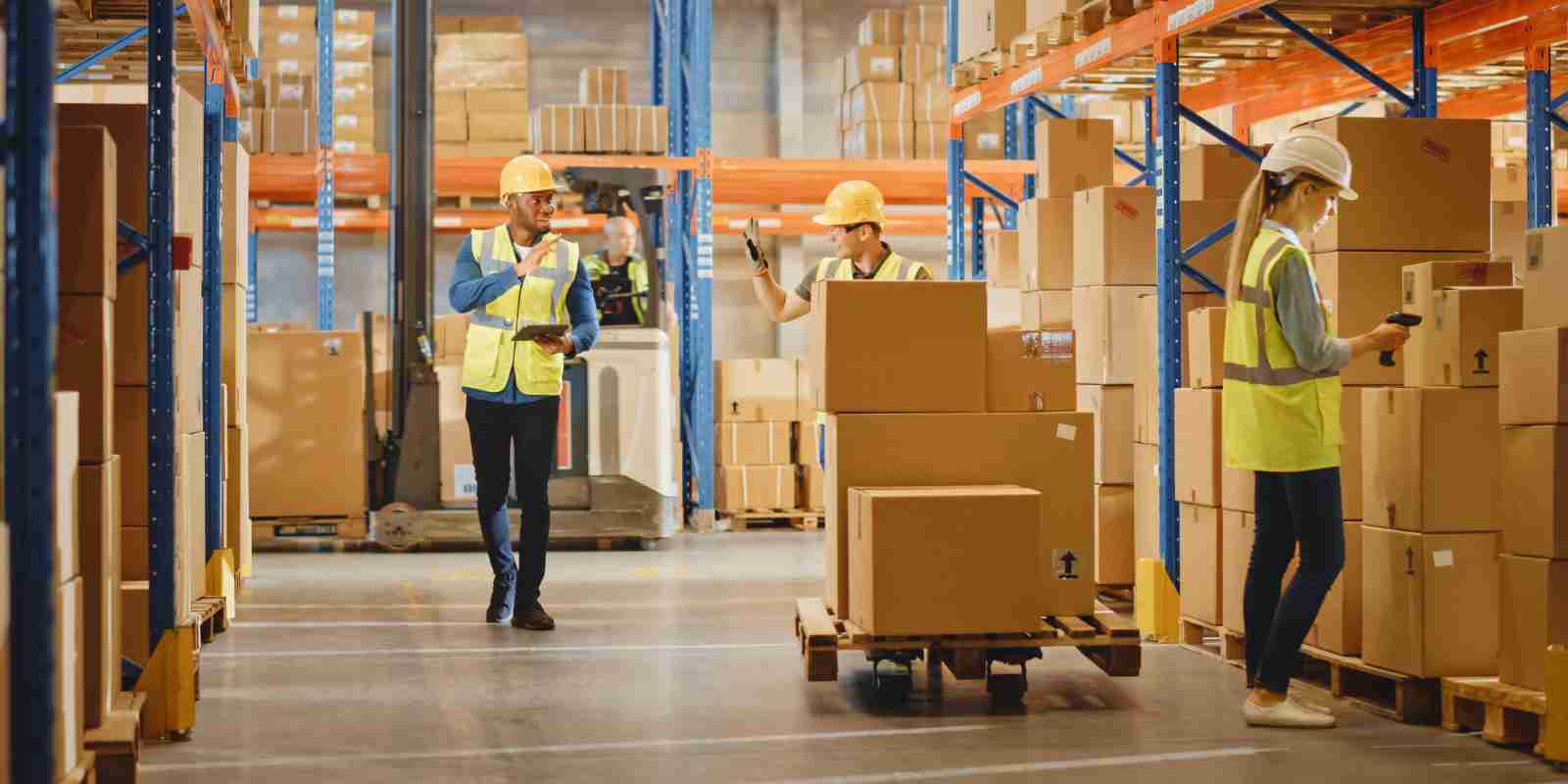
Warehouse handlers, loaders, and unloaders are the backbone of warehouse fulfillment. These positions must work reliably together to oversee operations, respond to issues, and adhere to regulations. Though their duties overlap, each role carries its own responsibilities, and distributors have a duty to recognize these differences to make sure the scope of their fulfillment process is covered by the skills available.
This article breaks down how material handlers, loaders, and unloaders compare to help distributors recognize their role, hire the right personnel for the job, and find warehouse workforce solutions that fill the gaps in their operations.
In This Article: Warehouse Roles Simplified
| Roles & Responsibilities | Solutions & Career Insights |
| Compare material handlers vs. loaders/unloaders | Explore career paths and advancement opportunities |
| Identify overlapping duties and teamwork needs | Learn how rapid-response warehouse solutions maintain operations |
| Understand logistical and physical differences | Discover technology tools like skill matching, geo-tracking, and automated shift logs |
What is a Warehouse Material Handler?
A warehouse material handler moves, stores, and manages products throughout the warehouse. They are responsible for maintaining proper shelf categories, handling delivering documents, and guaranteeing the items going out for shipments are accurate and undamaged. Handlers also check incoming deliveries to validate the warehouse’s purchases.
Key Duties & Tools
Material handlers perform a variety of essential tasks, often using specialized equipment to support efficiency and safety:
- Maintain shelf categories and organize inventory
- Handle delivery documentation and verify incoming shipments
- Prepare, label, and scan products for tracking and shipment
- Operate forklifts, pallet jacks, and other heavy machinery as needed
- Ensure outgoing shipments are accurate and ready for production lines
According to Zippia, there are over 174,000 material handler jobs available in the U.S. with an average annual salary of $33,215.
In a warehouse, handlers are the first and last line of defense against inaccurate orders, damaged items, and other issues. They help maintain order, efficiency, accuracy, and safety within the warehouse.
What is a Warehouse Loader/Unloader?
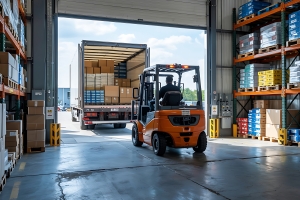
Unlike material handlers, who handle logistics processes related to organization, labeling, and shipping, warehouse loaders and unloaders are frontline logistics workers with a more limited range of responsibilities.
Loaders and unloaders work within the dock itself as products enter and leave, ensuring shipping vehicles are packed and unpacked within the strict timing requirements of busy warehouse fulfillment operations.
Key Duties & Tools
Loaders and unloaders have specialized responsibilities and operate equipment to maintain safety and speed:
- Load pallets and packages onto trucks or trailers while observing weight limits and space optimization
- Unload incoming shipments according to safety procedures and timing requirements
- Inspect packages for damage before acceptance or dispatch
- Operate forklifts, hand trucks, and other material-handling machinery
- Maintain dock safety procedures and comply with OSHA regulations
Compared to material handlers, loaders/unloaders rarely leave the docking and staging areas. They manage the flow of products using forklifts and hand trucks while maintaining dock safety procedures. There are far fewer loaders and unloaders compared to handlers, with around 67,000 operating in the U.S. despite similar salaries ($31,827) and growth rates.
Overlapping Responsibilities Between Handlers and Loaders
While the roles of handlers and loaders differ, they also share overlapping responsibilities, including:
- Following Occupational Safety and Health Administration (OSHA) guidelines
- Using heavy lifting equipment such as pallet jacks and forklifts
- Operating scanning equipment
- Practicing professional communication, teamwork, and logistics skills
- Maintaining accurate item counts, quality checks, and time tables
In smaller distribution operations, one person may occupy the role of handler and loader, managing logistics at the dock while also moving and organizing goods into storage.
Differences Between Material Handlers and Loaders

Despite these similarities, mid-sized and large distribution operations have both material handlers and loaders/unloaders. They work in tandem to guarantee that products arrive at the docks in the stated condition, move safely to the staging area, and return to the docks when shipment orders come in.
| Material Handlers | Loaders/Unloaders |
| Work primarily inside the warehouse, managing storage, organization, and inventory tracking | Work mainly at docks and staging areas, handling incoming and outgoing shipments |
| Focus on logistics, labeling, scanning, and preparing shipments | Focus on physical loading and unloading of trucks, trailers, and containers |
| Steadier, more logistical work with emphasis on accuracy and coordination | Faster-paced, physically demanding work with strict timing requirements |
| Often progress to management roles such as inventory specialist or warehouse supervisor | Often progress to higher responsibilities on the dock, such as forklift operator or dock supervisor |
| Ensure products are accurately stored, tracked, and shipped | Ensure products move quickly and safely between transport and staging areas |
| Work involves oversight of machinery and tracking tools throughout the warehouse | Work involves operating forklifts, hand trucks, and other heavy equipment at the dock |
The difference between warehouse material handlers and loaders/unloaders may seem subtle, but these two professionals work in tandem, often from different parts of the warehouse, to guarantee a smooth fulfillment process.
Rapid-Response Warehouse Solutions Guarantee the Right Workers for the Job
At NVT Staffing Warehouse Division, we supply handlers, loaders, and other warehouse professionals to help distributors maintain safe, consistent, and quality-assured operations without dealing with detailed hiring processes.
Our technology-driven platform gives managers access to advanced features such as personnel skill-matching, geo-tracking checkins, and automated shift logs. Managers can use our central web portal to view assignments, training requirements, and payment information for real-time control over skilled worker deployment.
Contact our team today to learn more about our certified and flexible warehouse services, with no long-term contract requirements. Our rapid-response teams can be available to your fulfillment processes within 72 hours to get your warehouses back on schedule.